Mastering the Local Network Outline Icon for Modern Design
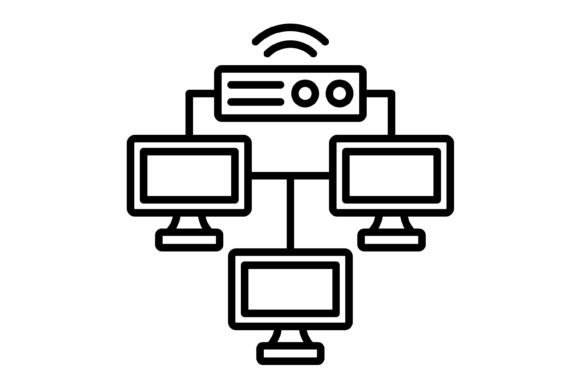
In the world of modern typography and design assets, the tools you choose define the clarity of your message. The Local Network Outline Icon represents a specific and highly functional niche in iconography. It is not merely a decorative element; it is a visual language designed to convey connectivity, data exchange, and digital infrastructure instantly. For designers, entrepreneurs, and content creators, understanding how to utilize this style of iconography is crucial for creating intuitive user interfaces and professional brand identities. This particular set of icons is designed with maximum usability in mind, ensuring that whether you are building a mobile app or drafting a corporate presentation, the visual cues remain sharp and effective.
Visual Characteristics and Design Personality
The defining trait of the Local Network Outline Icon is its minimalist aesthetic. Unlike heavy, filled graphics, outline icons rely on consistent stroke weights and negative space to communicate meaning. This style aligns perfectly with contemporary trends in web design and mobile app interfaces, where "flat design" and "material design" principles dominate. The personality of these icons is clean, technical, and organized. They do not scream for attention; rather, they guide the user's eye through a hierarchy of information with subtle precision. The visual appeal lies in their versatility. Because they are 100% vector icons, they possess infinite scalability. Whether displayed as a tiny favicon in a browser tab or blown up on a billboard for print, the lines remain crisp without pixelation.
Furthermore, the specific inclusion of various file formats—AI, EPS, JPG, PNG with transparent backgrounds, and SVG—highlights the professional utility of this package. The SVG format, in particular, is the gold standard for web design today. It ensures that the Local Network Outline Icon loads quickly and renders perfectly on high-resolution Retina screens. For the creative professional, these are not just images; they are functional design assets. The "outline" nature means they integrate seamlessly into complex layouts without adding visual clutter, making them ideal for templates and editorial design where text readability is paramount.
Strategic Applications in Branding and Marketing
For small business owners and brand strategists, the utility of the Local Network Outline Icon extends far beyond simple illustration. In logo design, a stylized network icon can instantly communicate a brand’s core value proposition—connectivity, support, or technology. It serves as a visual shorthand that aids in brand recognition. When used consistently across social media graphics, packaging design, and website headers, these icons help build a cohesive brand identity. Consistency breeds trust; when a customer sees the same high-quality, professional iconography on a mobile app and a printed invoice, it reinforces the legitimacy of the business.
Consider the impact on visual hierarchy in editorial design. A blog post about IT infrastructure can feel dry and text-heavy. By integrating the Local Network Outline Icon as section breaks or bullet points, you create breathing room for the reader. This improves readability and engagement. In the realm of presentation design, these icons act as anchors for key data points. Instead of walls of text, marketers can use these graphics to summarize complex network concepts visually. This practical application of typography and iconography ensures that the audience retains information more effectively, bridging the gap between complex data and user-friendly communication.
Practical Implementation and Technical Flexibility
The true value of a premium font or icon set lies in its flexibility. The Local Network Outline Icon is described as "ready to use for all devices and platforms," which is a critical feature for the modern creator. We live in a multi-platform world; a single project might need to function on an iOS app, an Android tablet, a Windows desktop, and a printed brochure. The inclusion of EPS and AI files means that print designers can easily manipulate the vectors in Adobe Illustrator for large-format printing, such as trade show banners or packaging. Simultaneously, the PNG files with transparent backgrounds allow for quick drag-and-drop usage in video editing software or social media managers who may not have advanced vector editing skills.
When evaluating how this icon set influences your project, consider the concept of "modern typography." While icons are not letters, they function as a typeface within a layout. They must align with the x-height and weight of your chosen serif font or sans serif font. The clean lines of the Local Network Outline Icon pair exceptionally well with geometric sans serif fonts, creating a sleek, futuristic vibe. However, they can also provide a modern counterpoint to a traditional serif font in a more corporate setting, balancing heritage with innovation. This ability to bridge different typographic styles makes them a versatile asset in any designer's toolkit.
Optimizing User Experience and Readability
Usability is the cornerstone of effective icon design. The prompt notes that these icons are designed for "maximum usability," which translates to intuitive recognition. A user should never have to guess what an icon represents. The Local Network Outline Icon utilizes standard visual metaphors that have been ingrained in digital culture, ensuring that navigation feels natural. In UI/UX design, clarity is king. If an icon is too ornate or abstract, it fails its primary job of guiding the user. The outline style helps here by reducing visual noise, allowing the user to focus on the content rather than the decoration.
For those involved in template creation or selling digital products, offering an "easy to edit" experience is vital. The fact that these vectors are fully editable allows other creatives to customize the color palette to match their specific brand identity requirements. You might need to change the stroke color from black to a brand-specific cyan to meet accessibility contrast standards against a specific background color. This level of control is non-negotiable for professional work. It ensures that the Local Network Outline Icon is not a rigid element, but a fluid component that adapts to the unique constraints of every project, from a minimalist startup website to a complex enterprise dashboard.
Conclusion: Elevating Your Creative Toolkit
Ultimately, the Local Network Outline Icon is more than just a collection of graphics; it is a solution to visual communication challenges. It bridges the gap between abstract concepts like "connectivity" and tangible visual elements. Whether you are a hobbyist crafting a personal blog or a professional agency developing a commercial app, having access to scalable, high-quality, and versatile icons streamlines the creative process. By prioritizing readability, consistency, and technical adaptability, these design assets empower you to produce work that is not only aesthetically pleasing but also functionally superior. It is a testament to how thoughtful design elements can elevate the entire user experience.